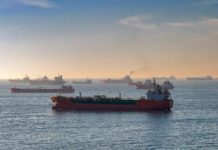








În anii 90’, sâmbătă dimineață rula pe TVR1 un serial de desene animate numit Pirații Apei Negre, care spunea povestea unei adunături pestrițe de pirați care încercau să salveze lumea de amenințarea Apei Negre, o substanță malignă, magică, care consuma oceanele lumii fictive. Copil fiind, nu înțelegeam metafora apei negre, o întruchipare a anxietății poluării și a degradării mediului înconjurător. Acum, ar putea la fel de bine să fie o metaforă pentru o altă amenințare: flota din umbră rusească, sute de petroliere ruginite care transportă lichidul negru pe oceanele lumii pentru a finanța lovituri asupra civililor ucraineni, printre ei și copii care nu vor mai prinde niciodată desenele de sâmbătă dimineață.
For English, click here
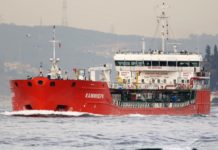
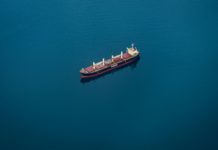
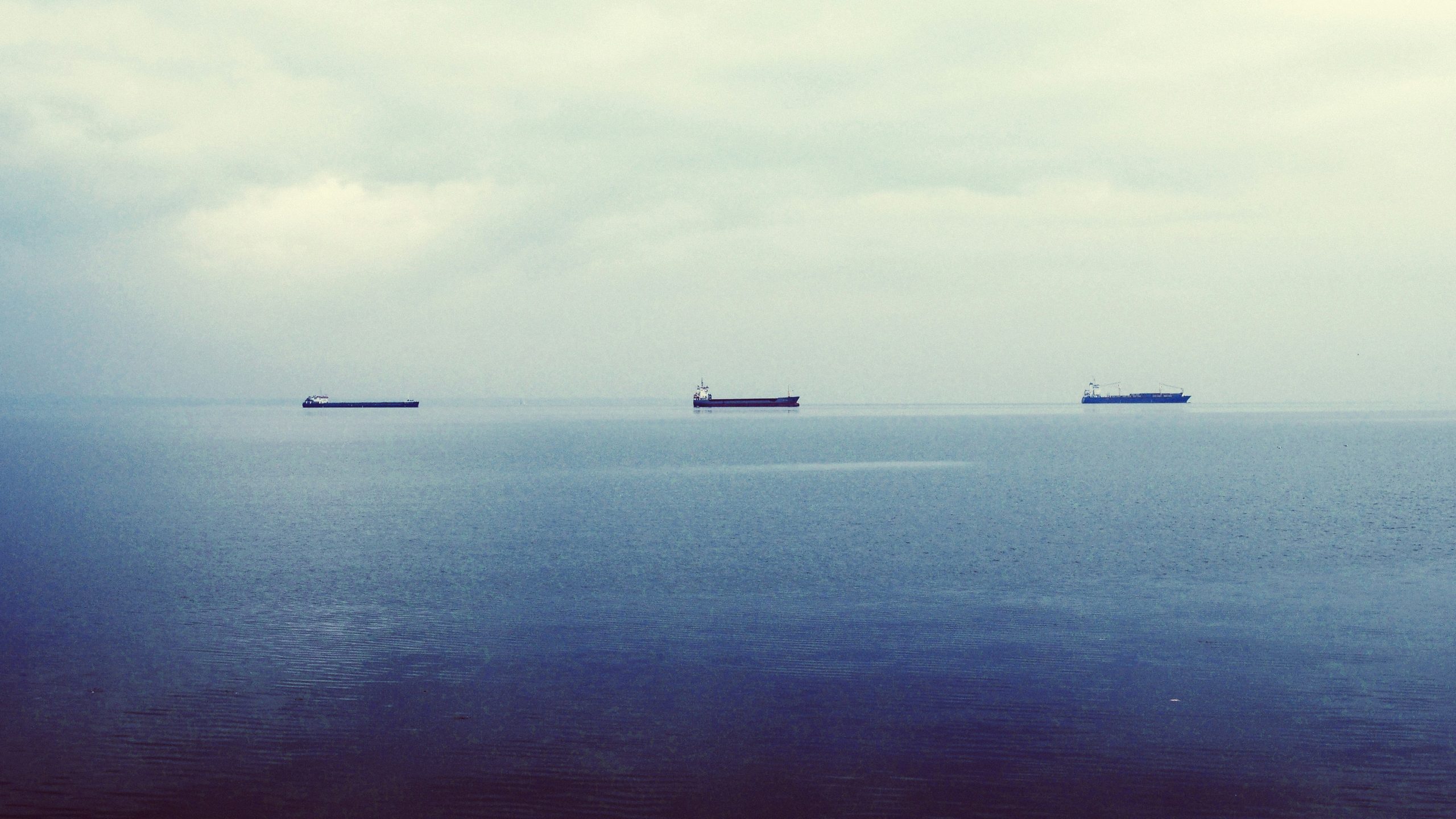
Flota din umbră nu este doar o formulare plastică pentru o activitate banală, transportul maritim. Flota din umbră este o rețea de nave comerciale (cu preponderență petroliere) folosită pentru a transporta mărfuri sancționate (țiței și produse derivate) prin structuri opace de proprietate și gestiune, pavilioane de conveniență sau false, asigurări “pe hârtie”, manipularea sau oprirea AIS (sistemul global de urmărire a poziției), documente falsificate și uneori transferuri ship-to-ship (STS) menite să ascundă originea și destinația încărcăturii. Flota din umbră este un concept în permanentă evoluție, atât din punct de vedere al navelor utilizate, cât și a metodelor folosite.
Conform Royal United Services Institute, peste 12% din comerțul maritim global derivă din activitatea flotelor din umbră (nu doar a Rusiei, dar și a Iranului, Chinei sau Venezuelei, printre alți actori statali), în timp ce 48% din marile petroliere se încadrează în aceste flote. Nu există o listă finală, exhaustivă, a acestor nave deoarece, prin definiție, aceste nave acționează sub vălul măsurilor de disimulare a identității și scopului transportului. Totuși, există un set de nave aflate sub sancțiuni emise în diverse jurisdicții. Portalul TankerTrackers.com centralizează resurse publice pentru a compila o listă de nave sancționate. La 6 ianuarie 2026, lista documenta peste 1300 de nave sancționate (nu doar în relație cu Rusia). Portalul ucrainean War and Sanctions listează 803 nave (strict în relație cu Rusia).
Principalul mecanism de sancționare a exportului de petrol rusesc adoptat de Uniunea Europeană este plafonul de preț raportat la baril. Începând cu 1 februarie, acest plafon a fost setat la 44,1 dolari/baril, raportat dinamic la prețul mediu al pieței pentru țițeiul Urali în perioada de referință anterioară (22 de săptămâni), preț față de care plafonul păstrează un ecart de 15% în minus. Membrii G7, mai puțin Statele Unite, s-au aliniat acestui mecanism dinamic.
Transferurile STS reprezintă un instrument logistic standard și reglementat în transportul maritim de țiței, guvernat de proceduri recunoscute internațional, însă sunt totodată recunoscute și ca o tactică cu risc ridicat pentru eludarea plafonului de preț deoarece pot întrerupe trasabilitatea și facilita „spălarea” încărcăturii prin combinarea petrolului de origine ilicită, cu petrol din surse legitime. În anumite condiții, STS-urile care au loc în zona economică exclusivă (ZEE) a unui stat trebuie să fie declarate de către părți autorităților, în principal din rațiuni de protejare a mediului împotriva poluării cu produse petroliere.
45north, în baza unei solicitări oficiale, a primit din partea Autorității Navale Române lista completă a notificărilor STS pe care le-a înregistrat, din 14.05.2022, până la 15.02.2026. Acest raport este o sursă bogată de informații cu privire la activitatea flotei din umbră în ZEE a României.
Din acest raport am extras mai multe informații generale, statistic relevante, dar ne-am și concentrat pe anumite subseturi de nave, pentru a înțelege care este legătura dintre flota din umbră și ecosistemul rusesc mai larg de influență hibridă, care include oligarhi, persoane juridice, politicieni, agenții de informații și structuri financiare, precum și alți actori statali. Astfel, la o primă vedere, raportul include:
Vezi figura 1 pentru repartizarea pe luni
Între primele 20 de nave ordonate după numărul de înregistrări STS în care sunt consemnate, 8 se află sub sancțiuni în diverse jurisdicții (nici una nu se afla sub sancțiuni la momentul ultimului STS înregistrat)
Între primele 20 de nave ordonate după numărul de înregistrări STS în care sunt consemnate, 7 navigau sub pavilion rusesc la momentul respectiv
* Suplimentar, mai există 10 intrări STS în raport care nu au completată longitudinea, toate cu aceeași latitudine (43°58’00 N, care în contextul Mării Negre, fără să știm longitudinea, ar putea să facă referire la un punct la sud de Constanța, nord de Mangalia). Cele mai frecvente trei coordonate (înregistrate pentru 426 de evenimente STS, din totalul de 721 de perechi de coordonate): 43°58’10″N 028°58’00″E (186 de evenimente), 44°00’00″N 029°00’00″E (130 de evenimente), 44°06’00″N 029°00’00″E (110 evenimente). Unele coordonate din raport aveau valori imposibile (minute sau secunde cu valori >59). Atunci când am făcut transformarea în valori zecimare pentru trasarea pe hartă, am migrat diferența spre minut (70 de secunde au devenit 1 minut și 10 secunde).
Volumul total de produs transferat este dificil de estimat, deoarece nu este o informație completată într-un format standardizat în raport. Uneori sunt completate intervale, alteori sunt folosite diverse abrevieri. O estimare grosieră a volumului total net transferat între nave este între 4 și 5 milioane tone metrice de produs. Principalele produse care par a fi transferate între nave sunt: LS MGO (Low Sulphur Marine Gas Oil, combustibil marin distilat), MDO (Marine Diesel Oil, Combustibil Diesel Marin), HFO (Heavy Fuel Oil) și VLSFO (Very Low Sulphur Fuel Oil).
* Folosind Gemini 3 și ChatGPT 5.2, care au calculat un preț mediu istoric, 2022 – prezent, pe principalele categorii de produse transferate, aplicate la intervalul cantitativ declarat, a rezultat o valoare totală de aproximativ 2,8 – 4,1 miliarde USD. pe baza analizei volumelor transferate și a tipului de produs, aproximativ 60%-70% din totalul transferat a avut ca scop vanzarea, iar 30%-40% a avut ca scop bunkerajul. Asta se traduce în volume de hidrocarburi transferate prin aceste STS-uri cu scop de vânzare în valoare de aproximativ 1,9 – 2,8 miliarde USD. Majoritatea volumului total dar și a valorii totale estimate se concentrează în jurul a trei nave: NEW TRUST, TOMMY și NEW LEGEND. Toate valorile legate de produsele transferate sunt aproximări extrem de grosiere și trebuie folosite doar ca indicatori a ordinului de mărime, adică milioane de tone de produse transferate în valoare de miliarde de dolari.
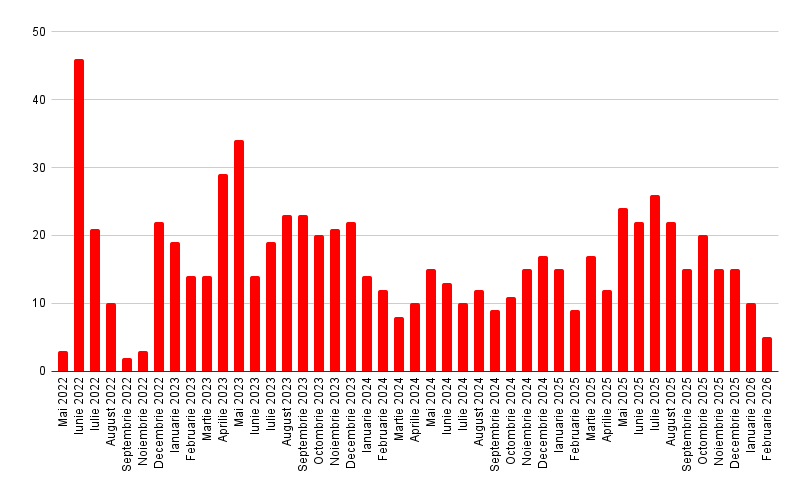
Fig. 1 Evoluția pe luni a STS-urilor din raportul ANR. Vârful de activitate: Iunie 2022, cu 46 de operațiuni STS unice. Media lunară: Aproximativ 16-18 operațiuni pe lună în perioada 2023-2025.
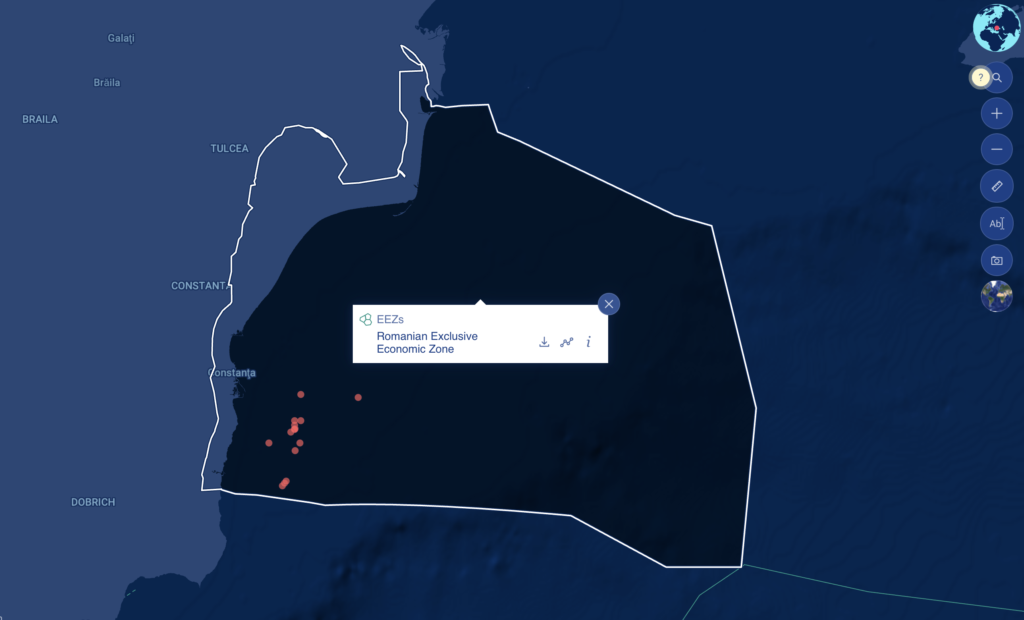
Fig. 2 Repartizarea geografică a STS-urilor cu perechi coordonate latitudine-longitudine care apar mai mult decât odată în raportul ANR. Trasarea lor s-a realizat în platforma Global Fishing Watch
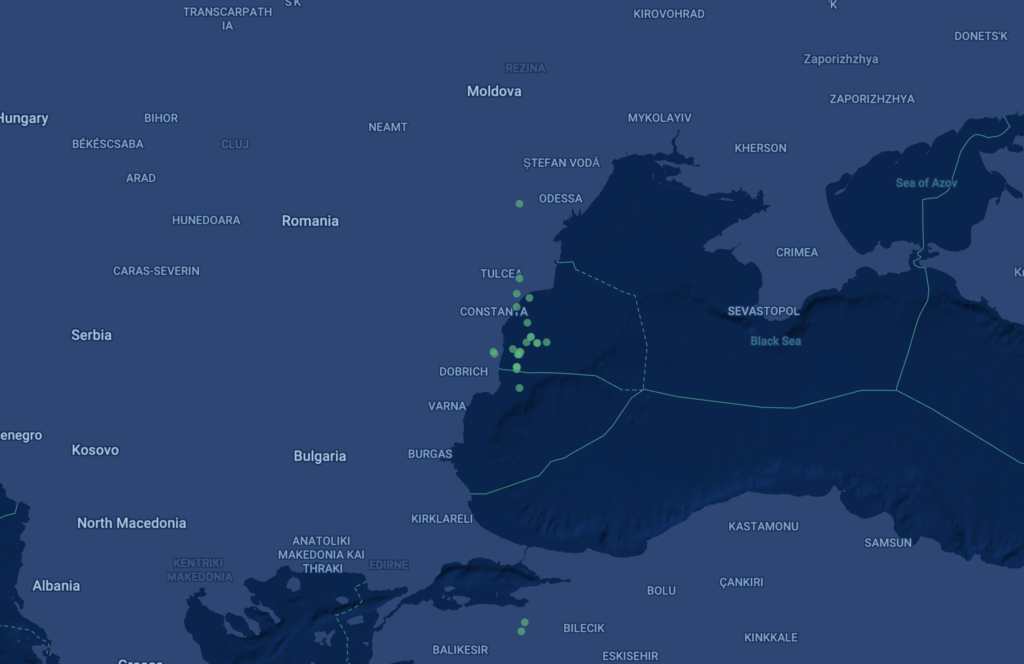
Fig. 3 Repartizarea geografică a STS-urilor cu perechi coordonate latitudine-longitudine care apar o singură dată în raportul ANR. Trasarea lor s-a realizat în platforma Global Fishing Watch. Unele puncte au o poziție în afara ZEE și imposibilă (pe uscat), fie din cauza transformării în valori zecimale a coordonatelor greșite (cu minute sau secunde cu valori >59) din raportul ANR, fie din cauza informațiilor greșite din raport
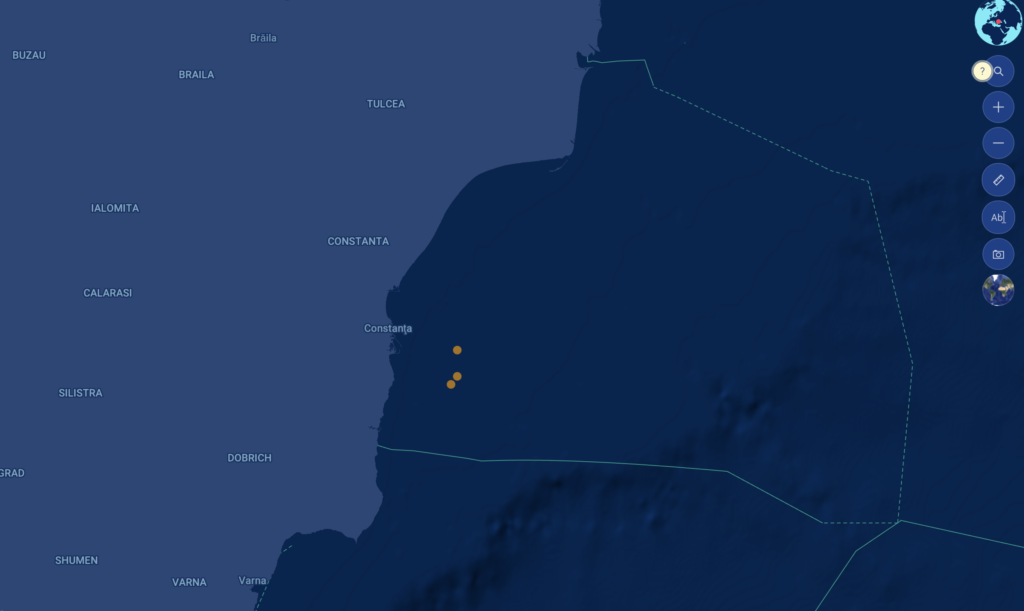
Fig. 4 Repartizarea geografică a STS-urilor cu cele mai frecvente trei perechi coordonate latitudine-longitudine din raportul ANR (426 de evenimente STS, din totalul de 721 de perechi de coordonate). Trasarea lor s-a realizat în platforma Global Fishing Watch.
ZEE a României, “pământ” rusesc
Am analizat mai atent navele care au fost înregistrate în raport cu pavilion rusesc. Bineînțeles, printre restul de 414 nave există numeroase exemple unde proprietarul final este de origine rusească sau sub control rusesc. Totuși, am ales aceste 35 de nave deoarece nici nu au mai utilizat o metodă de ascundere a identității la momentul în care au intrat în zona economică exclusivă a țării. Dintre aceste 35 de nave, doar 10 se află sub sancțiuni în una sau mai multe jurisdicții, niciuna mai devreme de 2025. Acest lucru indică caracterul reactiv al sancțiunilor. Niciuna din aceste nave nu a mai raportat un STS după data intrării în vigoare a sancțiunilor.
În general, sancțiunile sunt emise de Uniunea Europeană, Ucraina și Marea Britanie și ocazional de Canada, Elveția și Statele Unite. Această eterogenitate este un alt punct slab al sancțiunilor, faptul că nu se coordonează un răspuns transatlantic, deschide o portiță acestor nave de a funcționa în continuare. Majoritatea acestor nave încă navighează sub pavilion rusesc, dar multe dintre ele și-au schimbat denumirea. O parte și-au schimbat și pavilionul. Navele sancționate se află în proprietatea a șapte firme distincte: VOLGOTRANS LLC, FLOTPRO LLC, ILYA MUROMETS JSC, NAVIS JSC, SBK DOLINA LLC, MAZK MANAGEMENT LLC, TOSSE BAZARGANI IRANIAN NOAVAR CO LTD. Toate sunt companii rusești, mai puțin ultima, care este o companie iraniană. De cele mai multe ori, firma care este proprietar face și managementul navei. În două cazuri sunt companii diferite: ROSEWOOD SHIPPING LLC și ENEYA LLC.
Aceste firme nu sunt necunoscute. O parte dintre ele se află sub sancțiuni (Volgotrans, Rosewood) și au legături profunde cu oligarhi ruși și cu statul rus. Spre exemplu, firma Rosewood Shipping, care apare ca manager al navelor VF-TANKER-12 (actual SANAR-18), respectiv VF TANKER-7 (actual SANAR-17), este controlată de soția lui Viktor Medvedchuk, Oksana Marchenko. Medvedchuk este un fost politician ucrainean pro-rus, care a fost arestat de serviciile de informații ucrainene și predat Rusiei într-un schimb de prizonieri în septembrie 2022. Vladimir Putin este nașul de botez al fiicei lui Medvedchuk, Daria. Conform portalului de date maritime Equasys, Rosewood Shipping acționează ca manager pentru o flotă de 15 petroliere, toate sub pavilion rusesc. Dintre cele doua nave, doar SANAR-18 se află sub sancțiuni (UE, Elveția).
Compania Eneya apare ca manager pentru patru nave din cele 35, la una din ele (CASPIAN LEADER – 9235684) fiind și proprietar. Conform portalului ucrainean War and Sanctions, firma este afiliată cu Jamaldin Pashayev, sancționat de Statele Unite, Canada, Ucraina. Firma acestuia, împreună cu ecosistemul de logistică și transport pe care le controlează în zona Astrahan, Marea Caspică, au fost implicate în furnizarea de combustibil pentru aviație în Siria, în beneficiul Ministerului Apărării din Rusia. Pashayev este afiliat și companiei MG-FLOT LLC. Aceasta este sancționată în mai multe jurisdicții deoarece este implicată în transportul de armament dintre Coreea de Nord și Rusia. Eneya este asociată în trei din cele patru nave cu pavilion rusesc din raport cu compania proprietar SBK Dolina. Aceasta este deținută de banca rusească Sberbank, folosită pentru a recupera navele care fuseseră finanțate de Sberbank companiei turcești Palmali. Sberbank are drept acționar principal Banca Centrală a Rusiei. Doar 2 din cele 4 nave cu Eneya ca operator se află sub sancțiuni. CASPIAN STREAM (9228332) și CASPIAN LEADER (9235684) nu se află sub sancțiuni. Aici identificăm o altă deficiență evidentă a aplicării sancțiunilor. Deși aceste două nave se află clar sub același patronaj și acționează cu un scop comun, sancțiunile nu sunt aplicate uniform.
Rolul Greciei și al Emiratelor Arabe Unite
Primele două nave din punct de vedere al valorii volumului transferat, NEW TRUST (9274812) și NEW LEGEND (9230505) au legături cu Grecia. Ambele nave au drept ISM Manager (entitate responsabilă cu siguranța) o companie din Grecia: NEW SHIPPING LTD-LIB (57A, Bd. Poseidonos, Moschato nr. 57A, Piraeus). Ambele au pavilion liberian. Proprietarul NEW TRUST este o companie din Liberia. Proprietarul NEW LEGEND este o companie din Grecia, GRECO NAVIGATION LTD, având aceeași adresă ca NEW SHIPPING. Este posibil ca firma din Liberia să fie controlată de aceleași firme din Grecia, fiind o practică identificată în conferințe din domeniul maritim.
În aceeași conferință a Organizației Maritime Internaționale citată, autoritățile ucrainene au dat exemplu de transfer de produse petroliere în ZEE a României chiar petrolierul NEW LEGEND. NEW LEGEND mai este menționat și într-un raport din iunie 2025, emis de Black Sea News, care identifică încălcări a exportului de produse petroliere care pleacă din Marea Baltică. Raportul indică NEW LEGEND plecând din portul rusesc Primorsk spre portul turcesc Aliaga. Greco Navigation este deținută de Adamantios Polemis, dintr-o familie recunoscută în domeniul maritim din Grecia
Grecia a jucat un rol esențial în conceperea flotei din umbră în 2022. Conform unei investigații jurnalistice realizate de mai multe redacții europene, proprietarii greci de nave petroliere au avut o pondere majoritară în rândul vânzărilor către entități controlate de ruși, după invazia din februarie 2022 (până în 2024). Astfel, din punct de vedere cantitativ, grecii au vândut 127 din 230 de petroliere (55%), iar din punct de vedere valoric, au cumulat vânzări în valoare de 3,7 miliarde de dolari, dintr-un total de 6,3 miliarde. Una din companiile menționate des în această investigație este Thenamaris Ships Management, deținută de Konstantinos și Nikolas Martinos.
Un articol Forbes menționează cum marile familii din domeniul maritim din Grecia, inclusiv familia Martinos, au profitat de pe urma războiului, prin transportul de produse petroliere de origine rusă. Deși Reuters raporta în decembrie 2023 că Thenamaris a sistat aceste transporturi de frica sancțiunilor, există indicii că acest lucru continuă, inclusiv transporturi de produse petroliere între terminalul Sheskharis (terminal din portul Novorosisk, gestionat de Chernomortransneft JSC, entitate aflată sub sancțiuni americane) și porturi românești foarte recente.
Printre primele 20 de nave ordonate după numărul de STS-uri în care au fost implicate, 6 sunt deținute și gestionate de companii cu sediul în UAE. Cinci dintre acestea se află sub sancțiuni. Companiile care apar de mai multe ori sunt ZULU SHIPS MANAGEMENT, PULSAR INVESTMENTS CO LLC și XENA DMCC.
Un raport din 2024 redactat de Kyiv School of Economics (KSE) din august 024, analizează nucleul dur al flotei din umbră, navele de transport țiței sau produse derivate cu cel puțin un transport în fiecare trimestru din perioada ianuarie 2023 – iunie 2024. Astfel, au rezultat 45 de nave care transportă țiței și 41 care transportă produse derivate din petrol. Dintre cele din setul de 45, 28 erau gestionate la momentul publicării raportului de o firmă din UAE, Stream Ship Management Fzco. Alte 2 se aflau sub gestiunea firmei din UAE Alqutb Alshamali MarineSrvs. Dintre cele 41 de nave identificate că transportă produse derivate, 23 erau gestionate de companii din UAE.
O investigație a publicației finlandeze YLE a descoperit că o singură companie din Dubai, Avebury Shipmanagement LLC-FZ, este proprietarul a 24 de nave din flota din umbră, toate aflate sub sancțiuni în diverse jurisdicții. Alte 12 companii din Dubai dețin alte 31 de nave. Toate aceste elemente coroborate indică clar că UAE a devenit placa turnantă între Rusia și Vest, pentru a ascunde proveniența produselor, dar și a proprietarilor.
Revenind la companiile aferente STS-urilor din raportul ANR, Zulu Ships Management se află sub sancțiuni din partea Statelor Unite și Ucrainei. Sancțiunile impuse de Statele Unite în iulie 2025 au legătură cu rețeaua controlată de Mohammad Hossein Shamkhani. Hossein este fiul lui Ali Shamkhani, unul din consilierii de rang înalt al liderului suprem al Iranului, ayatollahul Ali Khamenei. Secretarul Trezoreriei Statelor Unite, Scott Bessent, este citat în comunicatul Trezoreriei spunând: „Imperiul maritim al familiei Shamkhani evidențiază modul în care elitele regimului iranian se folosesc de funcțiile lor pentru a acumula averi uriașe și pentru a finanța comportamentul periculos al regimului.”
O mare parte a acestei rețele funcționează prin intermediul unor entități din UAE, printre care și Zulu Ships Management. Din cele 449 de nave din raportul ANR, 4 se află pe lista de sancțiuni americană menționată mai sus, toate gestionate de Zulu: AETHER (IMO 9328170), MISHELL (IMO 9332315), MYRA (IMO 9336490), TOA PAYOH (IMO 9298492). Toate, mai puțin MISHELL, se află în top 20 după numărul de STS-uri la care au participat.
România este și ea menționată în acest comunicat. Firma Nest Wise Petroleum LLC din UAE a fost folosită de Shamkhani pentru a vinde sub aparența legitimității produse petroliere ilicite, de proveniență rusească și iraniană. Nest Wisse Petroleum este acționarul unic al unei companii din România, Nest Wise Trading SRL (CUI 46944830), înființată în septembrie 2022 și radiată în martie 2025 (decizia de radiere a fost luată, conform Monitorului Oficial, în data de 01.09.2024, Nest Wise Petroleum fiind reprezentată de Bouchama Ahmed, cetățean francez, născut în Maroc). Administratorul societății, la momentul radierii, era Caciandone Liliana, cetățean român. Beneficiarul real (UBO) declarat este un cetățean qatarez pe nume Mohd Hassan Al Thawadi . Al Thawadi controlează și o entitate din Marea Britanie, Nest Wise Trading Ltd. Nest Wise Trading SRL se află pe lista de sancțiuni sub umbrela ordinului executiv 13902.
Conform datelor disponibile public, Nest Wise Trading SRL a avut cifre financiare excelente în România. Astfel, a închis 2024 cu o cifră de afaceri de aproximativ 29 milioane de euro și profit de aproximativ 1,6 milioane de euro, cu doar 2 angajați. În 2023 a înregistrat 98 de milioane de euro cifră de afaceri și o pierdere de 1,6 milioane de euro, cu 5 angajați. Nest Wise Trading SRL apare conectată pe mai multe portaluri de informații de business cu o altă companie numită Contasist SRL (unde acționari sunt Liliana Caciandone și Maftei Daniela). CAEN-ul firmei este de servicii contabilitate.
STS-ul pierdut
În octombrie 2025 scriam despre activitatea navei TULU (IMO 9313462) în ZEE a României, mai exact despre faptul că a stat la ancoră la aproximativ 24 de kilometri de țărm, la travers de Tuzla, în perioada 24 iulie 2024 – 12 iunie 2025. Tulu apare în raportul ANR, sub numele de TOMMY și sub pavilion Barbados. Schimbarea de nume a avut loc la 1 iulie 2025. În prezent, Tulu navighează sub pavilion Guineea-Bissau, o jurisdicție notorie pentru fraudele legate de documente și pavilion. În analiza de atunci semnalam 67 de STS-uri efectuate în respectiva perioada. Am confirmat cu imagini din satelit un STS din data de 3 mai 2025, cu alte două nave, BACTON (IMO 9264283) și SOFOS (IMO 9278064).
Ulterior acestui STS, SOFOS s-a deplasat spre sudul Ciprului unde a început să emită semnale AIS false. Conform acestor semnale, la 6 iunie 2025, la ora 09:27 UTC, coordonatele erau 33.99° N / 33.88° E, însă imaginile satelitare disponibile arată că în această poziție nu se afla nicio navă. La nici două zile distanță, pe 8 iunie 2025, o navă cu aspect asemănător, dar fără semnal AIS activ, apare în imaginile din satelit în portul Baniyas, Siria, în timp ce desfășura operațiuni de descărcare. Siria se afla, la momentul respectiv, sub restricții de import petrol.
În raportul ANR nu se regăsește acest STS. SOFOS nu apare deloc în datele înregistrate în raport. În perioada raportului, 14.05.2022 – 15.02.2026, TULU apare implicat în 48 de evenimente STS unice, deși în analiza 45north din octombrie 2025 semnalam, pe baza datelor MarineTraffic, 67 de STS-uri doar în perioada iulie 2024 – iunie 2025. Din lista de nave cu care TULU a făcut STS, pe care am expus-o în octombrie, doar SOFOS și MESTRAL (9391402) nu se află în raportul ANR, restul apărând cel puțin într-un STS.
În partea a doua a acestei analize vom aprofunda mai mult datele din raport, prin asignarea de proprietari, manageri și statut de sancționat tuturor celor 449 de nave. Vom verifica prin imagini mai multe STS-uri și vom încerca să decriptăm fluxurile de petrol, gaz și bani care alimentează mașinăria de război rusă.
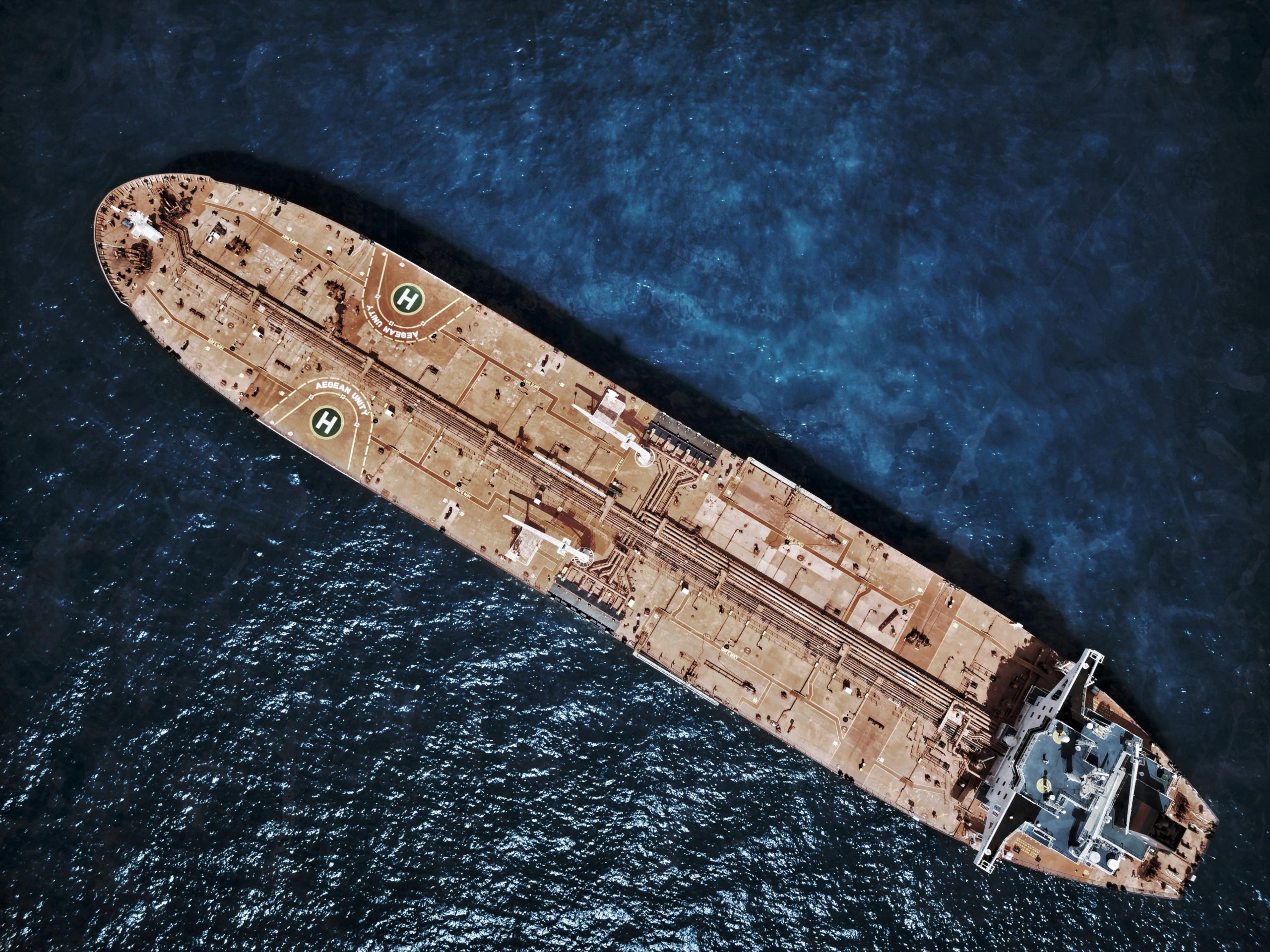
Pirates of the Dark Water: more than three years
of STS transfers in Romania’s EEZ (I)
In the 90s, on Saturday mornings, TVR1 used to air a cartoon called The Pirates of Dark Water. It told the story of a motley crew of pirates trying to save the world from the threat of the “Dark Water”, a malignant, magical substance consuming the oceans of a fictional world. As a child, I didn’t grasp the metaphor of the dark water: an embodiment of the anxiety surrounding pollution and environmental degradation. Today, it could just as easily serve as a metaphor for another threat: the Russian shadow fleet—hundreds of rusted tankers carrying the black liquid across the world’s oceans to finance strikes against Ukrainian civilians, including children who will never again catch the Saturday morning cartoons.
The shadow fleet is not merely a colorful phrase for a relatively mundane activity like maritime transport. The shadow fleet is a network of commercial vessels (predominantly tankers) used to transport sanctioned goods (crude oil and derivatives) through opaque ownership and management structures, flags of convenience or fraudulent flags, “on-paper” insurance, the manipulation or disabling of AIS (the global position tracking system), forged documents, and sometimes ship-to-ship (STS) transfers designed to conceal the cargo’s origin and destination. The shadow fleet is an ever-evolving concept, both in terms of the vessels employed and the methods utilized.
According to the Royal United Services Institute, over 12% of global maritime trade stems from shadow fleet activity (involving not only Russia, but also Iran, China, or Venezuela, among other state actors), while 48% of large tankers fall into this category. There is no final, exhaustive list of these vessels because, by definition, they operate under a veil of measures intended to disguise their identity and the purpose of their transport. However, there is a set of vessels currently under sanctions issued across various jurisdictions. The portal TankerTrackers.com centralizes public resources to compile a list of sanctioned vessels. As of January 6, 2026, the list documented over 1,300 sanctioned ships (not exclusively related to Russia). The Ukrainian portal War and Sanctions lists 803 vessels (strictly in relation to Russia).
The primary mechanism for sanctioning Russian oil exports adopted by the European Union is the price cap per barrel. Starting February 1st, this cap was set at $44.1 per barrel, dynamically indexed to the average market price for Urals crude during the previous reference period (22 weeks), maintaining a 15% discount relative to that price. G7 members, with the exception of the United States, have aligned themselves with this dynamic mechanism.
STS transfers represent a standard and regulated logistical tool in the maritime transport of crude oil, governed by internationally recognized procedures. However, they are also recognized as a high-risk tactic for evading the price cap, as they can break traceability and facilitate the “laundering” of cargo by blending oil of illicit origin with oil from legitimate sources. Under certain conditions, STS transfers occurring within a state’s Exclusive Economic Zone (EEZ) must be declared by the parties to the authorities, primarily for reasons of environmental protection against oil product pollution.
Based on an official request, 45north received from the Romanian Naval Authority (RNA) the complete list of ship-to-ship (STS) notifications recorded from May 14, 2022, to February 15, 2026. This report is a rich source of information regarding the activity of the shadow fleet within Romania’s Exclusive Economic Zone (EEZ).
From this report, we extracted several general, statistically relevant data points, while also focusing on specific subsets of vessels to understand the connection between the shadow fleet and the broader Russian ecosystem of hybrid influence—which includes oligarchs, legal entities, politicians, intelligence agencies, financial structures, and other state actors. At first glance, the report includes:
See fig. 1 for monthly distribution
Among the top 20 vessels ranked by the number of recorded STS entries in which they were involved, 8 are under sanctions in various jurisdictions (though none were sanctioned at the time of their last recorded STS
Among the top 20 vessels ranked by the number of recorded STS entries in which they were involved, 7 were sailing under the Russian flag at that time
* Additionally, there are 10 more STS entries in the report with missing longitude, all sharing the same latitude (43°58’00 N, which, in the Black Sea context and without the longitude data, could refer to a point south of Constanta and north of Mangalia). The three most frequent coordinates (recorded for 426 STS events out of a total of 721 pairs): 43°58’10″N 028°58’00″E (186 events), 44°00’00″N 029°00’00″E (130 events), and 44°06’00″N 029°00’00″E (110 events). Some coordinates in the report contained impossible values (minutes or seconds exceeding 59). When converting these into decimal values for mapping purposes, we migrated the difference to the next unit (e.g., 70 seconds became 1 minute and 10 seconds).
The total volume of product transferred is difficult to estimate because the information is not entered in a standardized format in the report. In some cases, ranges are provided, while in others, various abbreviations are used. A rough estimate of the total net volume transferred between vessels is between 4 and 5 million metric tons of product. The primary products appearing to be transferred are: LS MGO (Low Sulphur Marine Gas Oil), MDO (Marine Diesel Oil), HFO (Heavy Fuel Oil), and VLSFO (Very Low Sulphur Fuel Oil).
Using Gemini 3 and ChatGPT 5.2 to calculate historical average prices from 2022 to the present for the main categories of transferred products, applied to the declared quantities, resulted in a total value of approximately $2.8 – $4.1 billion USD. Based on the analysis of transferred volumes and product types, approximately 60%-70% of the total volume was intended for sale, while 30%-40% was for bunkering. This translates to hydrocarbons transferred via these STSs for sale purposes valued at approximately $1.9 – $2.8 billion USD. The majority of the total volume and estimated total value is concentrated around three vessels: NEW TRUST, TOMMY, and NEW LEGEND. All values related to the transferred products are extremely rough approximations and should be used only as indicators of the order of magnitude: namely, millions of tons of products transferred, worth billions of dollars.
Fig. 1 Monthly evolution of STS operations from the RNA report. Peak activity: June 2022, with 46 unique STS operations. Monthly average: Approximately 16-18 operations per month during the 2023-2025 period
Fig. 2 Geographical distribution of STS operations with latitude-longitude coordinate pairs that appear more than once in the RNA report. Mapping was conducted using the Global Fishing Watch platform.
Fig. 3 Geographical distribution of STS operations with latitude-longitude coordinate pairs that appear only once in the ANR report. Mapping was conducted using the Global Fishing Watch platform. Some points are located outside the EEZ or in impossible positions (on land), either due to the decimal conversion of erroneous coordinates (with minutes or seconds exceeding 59) from the RNA report, or due to incorrect information within the report itself.
Fig. 4 Geographical distribution of STS operations featuring the three most frequent latitude-longitude coordinate pairs from the RNA report (426 STS events out of a total of 721 coordinate pairs). Mapping was conducted using the Global Fishing Watch platform.
Romania’s EEZ, Russian “Soil”
We have taken a closer look at the vessels recorded in the report under the Russian flag. Naturally, among the other 414 vessels, there are numerous examples where the ultimate beneficial owner is of Russian origin or under Russian control. However, we chose these 35 vessels because they did not even employ identity-hiding methods at the time they entered the country’s Exclusive Economic Zone (EEZ). Of these 35 vessels, only 10 are under sanctions in one or more jurisdictions, none earlier than 2025. This indicates the reactive nature of sanctions. None of these vessels reported an STS transfer after the date the sanctions came into effect.
In general, sanctions are issued by the European Union, Ukraine, and the United Kingdom, and occasionally by Canada, Switzerland, and the United States. This heterogeneity is another weakness of the sanctions regime; the lack of a coordinated transatlantic response opens a loophole for these vessels to continue operating. Most of these ships still sail under the Russian flag, but many have changed their names. Some have also changed their flags. The sanctioned vessels are owned by seven distinct firms: VOLGOTRANS LLC, FLOTPRO LLC, ILYA MUROMETS JSC, NAVIS JSC, SBK DOLINA LLC, MAZK MANAGEMENT LLC, and TOSSE BAZARGANI IRANIAN NOAVAR CO LTD. All are Russian companies except for the last one, which is Iranian. In most cases, the owner also manages the vessel. In two instances, these are different companies: ROSEWOOD SHIPPING LLC and ENEYA LLC.
These companies are not completely unknown. Some of them are under sanctions (Volgotrans, Rosewood) and have deep ties to Russian oligarchs and the Russian state. For example, Rosewood Shipping, which appears as the manager of the vessels VF-TANKER-12 (now SANAR-18) and VF TANKER-7 (now SANAR-17), is controlled by Viktor Medvedchuk’s wife, Oksana Marchenko. Medvedchuk is a former pro-Russian Ukrainian politician who was arrested by Ukrainian intelligence services and handed over to Russia in a prisoner exchange in September 2022. Vladimir Putin is the godfather of Medvedchuk’s daughter, Daria. According to the maritime data portal Equasys, Rosewood Shipping acts as the manager for a fleet of 15 tankers, all under the Russian flag. Of the two aforementioned vessels, only SANAR-18 is currently under sanctions (EU, Switzerland).
The company Eneya appears as the manager for four of the 35 vessels, being the owner of one (CASPIAN LEADER – 9235684). According to the Ukrainian portal War and Sanctions, the firm is affiliated with Jamaldin Pashayev, who is sanctioned by the United States, Canada, and Ukraine. His company, along with the logistics and transport ecosystem he controls in the Astrakhan and Caspian Sea regions, has been involved in providing aviation fuel to Syria for the benefit of the Russian Ministry of Defense. Pashayev is also affiliated with MG-FLOT LLC, which is sanctioned in several jurisdictions for its involvement in arms transport between North Korea and Russia. For three of the four Russian-flagged vessels in the report, Eneya is associated with the company SBK Dolina, acting as owner. SBK Dolina is owned by the Russian bank Sberbank and was used to recover vessels that Sberbank had financed for the Turkish company Palmali. Sberbank’s majority shareholder is the Central Bank of Russia. Only two of the four vessels operated by Eneya are under sanctions. CASPIAN STREAM (9228332) and CASPIAN LEADER (9235684) are not sanctioned. Here we identify another glaring deficiency in the enforcement of sanctions: although these two vessels are clearly under the same patronage and act with a common purpose, sanctions are not applied uniformly.
The Role of Greece and the United Arab Emirates
The top two vessels in terms of transferred volume value, NEW TRUST (9274812) and NEW LEGEND (9230505), have links to Greece. Both vessels have a Greek company as their ISM Manager (the entity responsible for safety): NEW SHIPPING LTD-LIB (57A, Poseidonos Blvd., Moschato No. 57A, Piraeus). Both fly the Liberian flag. The owner of NEW TRUST is a company from Liberia, while the owner of NEW LEGEND is a Greek company, GRECO NAVIGATION LTD, sharing the same address as NEW SHIPPING. It is possible that the Liberian firm is controlled by the same Greek entities, a common practice identified in maritime industry conferences.
In the same International Maritime Organization conference cited above, Ukrainian authorities gave the tanker NEW LEGEND as an example of oil product transfers within Romania’s EEZ. NEW LEGEND is also mentioned in a June 2025 report by Black Sea News, which identifies violations of oil product exports originating from the Baltic Sea. The report indicates NEW LEGEND departing from the Russian port of Primorsk bound for the Turkish port of Aliaga. Greco Navigation is owned by Adamantios Polemis, a member of a prominent Greek shipping family.
Greece played a pivotal role in the conception of the shadow fleet in 2022. According to a journalistic investigation by several European newsrooms, Greek tanker owners accounted for the majority of sales to Russian-controlled entities following the February 2022 invasion (up until 2024). In quantitative terms, Greeks sold 127 out of 230 tankers (55%), and in terms of value, they accumulated sales worth $3.7 billion out of a total of $6.3 billion. One of the companies frequently mentioned in this investigation is Thenamaris Ships Management, owned by Konstantinos and Nikolas Martinos.
A Forbes article mentions how major Greek shipping families, including the Martinos family, profited from the war by transporting Russian-origin oil products. Although Reuters reported in December 2023 that Thenamaris had halted these shipments for fear of sanctions, there are indications that this continues, including very recent oil product shipments between the Sheskharis terminal (a terminal in Novorossiysk port managed by Chernomortransneft JSC, a U.S. sanctioned entity) and Romanian ports.
Among the top 20 vessels ranked by the number of STS they have been involved in, 6 are owned and managed by companies based in the UAE. Five of these are under sanctions. The companies appearing multiple times are ZULU SHIPS MANAGEMENT, PULSAR INVESTMENTS CO LLC, and XENA DMCC.
An August 2024 report by the Kyiv School of Economics (KSE) analyzes the “core” of the shadow fleet – tankers carrying crude or refined products with at least one shipment in every quarter between January 2023 and June 2024. This resulted in a set of 45 vessels transporting crude oil and 41 transporting oil derivatives. Of the 45-vessel set, 28 were managed at the time of publication of the report by a UAE firm, Stream Ship Management Fzco. Another 2 were under the management of the UAE firm Alqutb Alshamali MarineSrvs. Of the 41 vessels identified as transporting derivatives, 23 were managed by UAE-based companies.
An investigation by the Finnish publication YLE discovered that a single Dubai company, Avebury Shipmanagement LLC-FZ, is the owner of 24 shadow fleet vessels, all under sanctions in various jurisdictions. Another 12 Dubai companies own an additional 31 vessels. All these corroborated elements clearly indicate that the UAE has become the pivot between Russia and the West, serving to hide both the origin of products and the identity of owners.
Returning to the companies related to the STSs in the RNA report, Zulu Ships Management is under sanctions from the United States and Ukraine. The sanctions imposed by the United States in July 2025 are linked to the network controlled by Mohammad Hossein Shamkhani. Hossein is the son of Ali Shamkhani, a high-ranking advisor to Iran’s Supreme Leader, Ayatollah Ali Khamenei. U.S. Treasury Secretary Scott Bessent is quoted in the Treasury release saying: “The Shamkhani family’s shipping empire highlights how Iranian regime elites use their positions to accumulate vast wealth and finance the regime’s dangerous behavior.” Much of this network operates through UAE entities, including Zulu Ships Management. Of the 449 vessels in the RNA report, 4 are on the aforementioned U.S. sanctions list, all managed by Zulu: AETHER (IMO 9328170), MISHELL (IMO 9332315), MYRA (IMO 9336490), and TOA PAYOH (IMO 9298492). All except MISHELL are in the top 20 by number of STS participations.
Romania is also mentioned in this release. The UAE firm Nest Wise Petroleum LLC was used by Shamkhani to sell illicit oil products of Russian and Iranian origin under the guise of legitimacy. Nest Wise Petroleum is the sole shareholder of a Romanian company, Nest Wise Trading SRL (CUI 46944830), established in September 2022 and dissolved in March 2025. (the decision to dissolve was made, according to the Official Gazette, on September 1, 2024, with Nest Wise Petroleum being represented by Bouchama Ahmed, a French citizen born in Morocco). At the time of dissolution, the company’s administrator was Liliana Caciandone, a Romanian citizen. The declared Ultimate Beneficial Owner (UBO) is a Qatari citizen named Mohd Hassan Al Thawadi. Al Thawadi also controls a UK entity, Nest Wise Trading Ltd. Nest Wise Trading SRL is on the sanctions list under the umbrella of Executive Order 13902.
According to publicly available data, Nest Wise Trading SRL had excellent financial figures in Romania. It closed 2024 with a turnover of approximately €29 million and a profit of approximately €1.6 million, with only 2 employees. In 2023, it recorded a €98 million turnover and a €1.6 million loss, with 5 employees. Nest Wise Trading SRL appears connected on several business intelligence portals to another company called Contasist SRL (where the shareholders are Liliana Caciandone and Daniela Maftei). The company’s NACE code reflects accounting services.
The Lost STS
In October 2025, we wrote about the activities of the vessel TULU (IMO 9313462) in Romania’s EEZ, specifically, the fact that it remained at anchor approximately 24 kilometers offshore, abreast of Tuzla, between July 24, 2024, and June 12, 2025. Tulu appears in the Romanian Naval Authority report under the name TOMMY and under the flag of Barbados. The name change occurred on July 1, 2025. Currently, Tulu sails under the flag of Guinea-Bissau, a jurisdiction notorious for document and flag fraud. In the analysis at that time, I highlighted 67 STS transfers carried out during that period. I confirmed via satellite imagery one STS on May 3, 2025, involving two other vessels: BACTON (IMO 9264283) and SOFOS (IMO 9278064).
Following this STS, SOFOS moved toward the south of Cyprus, where it began broadcasting false AIS signals. According to these signals, on June 6, 2025, at 09:27 UTC, its coordinates were 33.99° N / 33.88° E; however, available satellite imagery shows that no vessel was present at that position. Less than two days later, on June 8, 2025, a vessel of similar appearance, but without an active AIS signal, appeared in satellite imagery at the port of Baniyas, Syria, while performing discharge operations. At that time, Syria was under oil import restrictions.
This specific STS is not found in the RNA report. In fact, SOFOS does not appear in the report’s recorded data at all. During the period covered by the report (May 14, 2022 – February 15, 2026), TULU appears involved in 48 unique STS events, even though the October 2025 45north analysis pointed out 67 STS transfers based on MarineTraffic data for the July 2024 – June 2025 period alone. Of the list of vessels with which TULU conducted STS transfers (which we disclosed in October), only SOFOS and MESTRAL (9391402) are missing from the RNA report; the others appear in at least one STS entry.
In the second part of this analysis, we will delve deeper into the report’s data by assigning owners, managers, and sanction statuses to all 449 vessels. We will verify several STS transfers through imagery and attempt to decrypt the flows of oil, gas, and money that fuel the Russian war machine.